
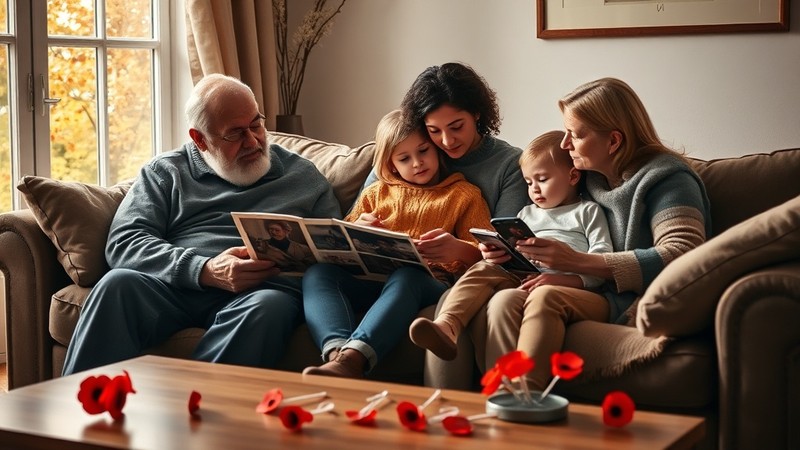
Creating lasting memories while teaching children about sacrifice, service, and gratitude
Remembrance Day holds profound significance for Canadians, yet many parents struggle with how to explain its importance to young children. How do you honour the gravity of war and sacrifice while making the concepts accessible to developing minds? The key lies in creating meaningful, age-appropriate experiences that help children understand the values of peace, freedom, and gratitude.
At 11 o’clock on the 11th day of the 11th month, people across Canada pause to remember those who served and sacrificed for our freedoms. This moment of silence represents more than just tradition—it’s an opportunity to connect our children with their heritage and teach them about the cost of the peace we enjoy today.
Here are five thoughtful ways to observe Remembrance Day with your family, each designed to create understanding and respect while honouring those who served.
1. Wear and Understand the Poppy Together
The Story Behind the Symbol
The red poppy isn’t just a beautiful flower—it carries profound meaning rooted in history. Share with your children how poppies grew wild across the battlefields of France and Belgium during World War I. The poem “In Flanders Fields” by Canadian Lieutenant-Colonel John McCrae immortalized these flowers as symbols of remembrance.
For younger children (ages 3-6):
- Explain that the poppy is a special flower that helps us remember brave people
- Point out the red colour represents love and the black centre represents sadness for those who died
- Make it a family tradition to pin on poppies together each November
For school-age children (ages 7-12):
- Read “In Flanders Fields” together and discuss its meaning
- Explain how poppy sales support veterans and their families
- Encourage them to wear their poppy with pride and explain its significance to friends
For teens:
- Discuss the ongoing relevance of remembrance in today’s world
- Encourage them to research modern peacekeeping missions
- Talk about how the values of service and sacrifice apply beyond military service
Making It Interactive
Create a family poppy ceremony where each member shares something they’re grateful for that veterans helped protect—whether it’s freedom to go to school, play in parks, or speak their minds. This transforms the simple act of wearing a poppy into a meaningful family moment.
2. Attend Ceremonies or Watch Together
Preparing Children for Remembrance Day Events
Attending a Remembrance Day ceremony can be a powerful experience for children, but preparation is key to helping them understand and participate respectfully.
Before the ceremony:
- Explain what will happen: the parade, speeches, moment of silence, and wreath-laying
- Practice standing quietly for two minutes (start with shorter periods for younger children)
- Discuss appropriate behaviour and why it matters
- Bring quiet activities for very young children in case they become restless
During the ceremony:
- Point out different elements: the Last Post, the laying of wreaths, veterans in attendance
- Help children identify different uniforms and explain various service branches
- Encourage them to observe people’s faces and the solemnity of the moment
After the ceremony:
- Discuss what they saw and felt
- Answer questions that may arise
- Thank any veterans you encounter
- Visit war memorials to read names and leave flowers
Creating Your Own Family Ceremony
If attending public ceremonies isn’t possible, create your own meaningful observance at home:
- Set up a quiet space with photos of family members who served
- Light a candle at 11 a.m.
- Read poems or stories about remembrance
- Share family military history if applicable
- Play recordings of “The Last Post” and “Reveille”
3. Observe the Sacred Moment of Silence
Teaching the Power of Pause
Two minutes can feel like an eternity to a young child, but learning to observe silence respectfully is an important life skill that extends far beyond Remembrance Day.
Age-appropriate silence lengths:
- Ages 3-5: 30 seconds to 1 minute
- Ages 6-8: 1-1.5 minutes
- Ages 9+: Full 2 minutes
What to think about during silence:
- People who fought for our freedom
- Families who lost loved ones in wars
- What peace means to us
- How lucky we are to live in Canada
- Ways we can help others
Practice Makes Perfect
In the weeks leading up to Remembrance Day, practice moments of silence during family time. Start with shorter periods and gradually increase the duration. Explain that this quiet time is for thinking important thoughts and showing respect.
Create a special “remembrance corner” in your home with photos, poppies, or books about peace. Use this space for your moment of silence, making it feel sacred and important.
4. Connect with Veterans and Service Members
Building Bridges Between Generations
One of the most meaningful ways to observe Remembrance Day is by connecting your children directly with those who served. These personal connections bring history to life and create lasting impressions.
Ways to connect:
- Visit local veterans in nursing homes
- Attend community events where veterans share stories
- Participate in “Adopt a Veteran” programs
- Interview family members or neighbours who served
- Write thank-you letters to current service members
Conversation starters for children:
- “Thank you for keeping our country safe”
- “What was your favourite part about serving?”
- “What do you want people to remember?”
- “How can we help make the world more peaceful?”
Teaching Gratitude Through Action
Help children understand that gratitude is more than words—it’s action. Encourage them to:
- Help elderly veterans with yard work or shopping
- Participate in poppy distribution
- Raise money for veteran support organizations
- Volunteer at Remembrance Day events
- Create care packages for current service members
5. Participate in “Write to the Troops” Projects
The Power of Written Words
Letter-writing projects offer children a tangible way to show appreciation while developing empathy and communication skills. These initiatives connect young Canadians with service members deployed overseas or veterans in care facilities.
Getting started:
- Contact Veterans Affairs Canada for current programs
- Reach out to local Legion branches for opportunities
- Check with schools for organized letter-writing campaigns
- Visit the National Defence website for guidelines
What children can include:
- Drawings of Canadian flags, maple leaves, or poppies
- Photos of Canadian landmarks or their community
- Stories about their school, hobbies, or family
- Questions about service life (appropriate ones)
- Simple thank-you messages
- Poems about peace or freedom
Making Letters Special
For non-writers:
- Encourage drawings with simple messages
- Help them dictate letters for you to write
- Use stickers, stamps, or coloured paper
- Include handprints or traced hands
For emerging writers:
- Provide templates with sentence starters
- Help with spelling but let them express their own thoughts
- Encourage questions about military life
- Include details about their daily life in Canada
For confident writers:
- Research the recipient’s service branch or deployment location
- Ask thoughtful questions about their experiences
- Share what they’ve learned about Canadian military history
- Express specific things they’re grateful for
Additional Meaningful Activities
Creative Remembrance Projects
Paper Poppy Crafts: Transform coffee filters into beautiful poppies using red paint or markers, with black pipe cleaner centres. This hands-on activity reinforces the poppy’s symbolism while creating keepsakes.
Memory Books: Create family scrapbooks documenting relatives who served, including photos, stories, and medals. This preserves family history while making remembrance personal.
Peace Pledges: Have children write or draw their commitments to creating peace in their daily lives—being kind to others, resolving conflicts peacefully, or helping those in need.
Educational Opportunities
Age-Appropriate Books:
- “The Poppy Lady” by Barbara E. Walsh (ages 4-8)
- “In Flanders Fields” picture book versions (ages 5-10)
- “The Kids Book of Canadian History” (ages 8-12)
- “Remembrance Day” by Danielle Sensier (ages 6-10)
Virtual Museum Tours: Explore Canadian War Museums online, taking virtual tours of exhibits and accessing educational resources designed for children.
Documentary Viewing: Watch age-appropriate documentaries about Canadian military history, focusing on peacekeeping missions and humanitarian efforts.
Addressing Difficult Questions
When Children Ask About War and Death
Remembrance Day naturally raises questions about difficult topics. Here’s how to address common concerns:
“Why do people fight wars?” Explain that sometimes people disagree so strongly they think fighting is the only answer, but that there are usually better ways to solve problems. Emphasize that soldiers often work to protect people and bring peace.
“Are there wars happening now?” Acknowledge that conflicts exist but focus on Canada’s role as peacekeepers and helpers. Discuss how Canadian forces often provide aid, medical care, and protection to people in need.
“Will there be another big war?” Reassure children that many people work hard to prevent wars through talking, sharing, and helping each other. Emphasize the role of organizations like the United Nations in promoting peace.
“Why do soldiers have to die?” Explain that soldiers accept risks to protect others, like firefighters or police officers. Emphasize that we remember them because they cared more about helping others than their own safety.
Making Remembrance a Year-Round Value
Beyond November 11th
While Remembrance Day provides a focal point for these discussions, the values it represents—gratitude, service, peace, and sacrifice—can be woven throughout the year.
Monthly family gratitude discussions: Set aside time each month to discuss what freedoms and privileges your family enjoys because of others’ sacrifices.
Community service projects: Engage in activities that serve others, teaching children that they too can make sacrifices for the greater good.
Conflict resolution practice: Use daily disagreements as opportunities to practice peaceful problem-solving, reinforcing the importance of choosing communication over conflict.
Creating Your Family Tradition
Every family can develop their own meaningful Remembrance Day traditions. Consider combining several of these approaches:
- Start the day with a family breakfast featuring Canadian foods
- Read remembrance stories together
- Attend a ceremony or watch on television
- Observe silence at 11 a.m.
- Write letters to veterans or service members
- End the day sharing what each person is most grateful for
Remember, the goal isn’t to create perfectly patriotic children, but to raise compassionate, grateful individuals who understand the value of peace and the cost of freedom. Through thoughtful observation of Remembrance Day, we help our children connect with their heritage while building character that will serve them throughout their lives.
As you plan your family’s Remembrance Day observance this year, remember that small, sincere gestures often have the greatest impact. Whether your child wears their poppy with pride, stands quietly during the moment of silence, or thanks a veteran for their service, these acts of remembrance create connections that last far beyond November 11th.
What meaningful traditions will your family create this Remembrance Day? The memories you make today will shape your children’s understanding of gratitude, service, and peace for years to come.